Last Thursday, the 21st of May, I was delighted to have been invited to speak at the Digit.FYI AI Business Summit in Glasgow. Especially, as I was invited, not as an expert in AI but as an expert in human behaviour and user experience to talk about how AI is changing user experience. As a hitchhiker if you will in our new AI Galaxy.
Instead of talking about Responsible AI, lets talk about being Responsible Humans
So, whilst a lot of people who talk about AI are promising it will give the ultimate answer to Life, the Universe, and Everything.
I was there to give a more human, perspective on the huge benefits of AI and how it is changing the user experiences we are delivering. But, also, why it is so important to ensure that we have responsible people making decisions on real, verified human evidence, to create organisational and societal value.
Every boardroom right now is fixated on ‘Responsible AI.’ But what if we’re looking at the problem through the wrong lens entirely? What assumptions are we holding when we treat technology as the agent? Let’s stop talking about managing the machine and start talking about being Responsible Humans.
The velocity paradox: Technology changes at a faster pace then human behaviour and regulation
No one can deny that Generative AI and automation has rapidly changed the way we work and live. In a study of 1,000 UK consumers conducted by EY and released in May this year 74% had used AI recently, integrating into their daily life and work. AI is here to stay, and its usage is only going to increase.
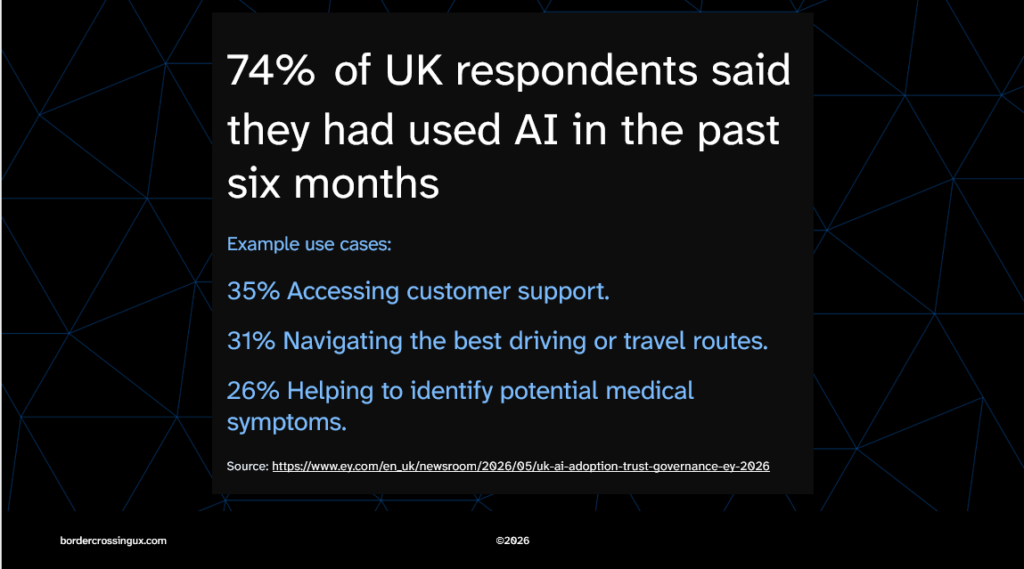
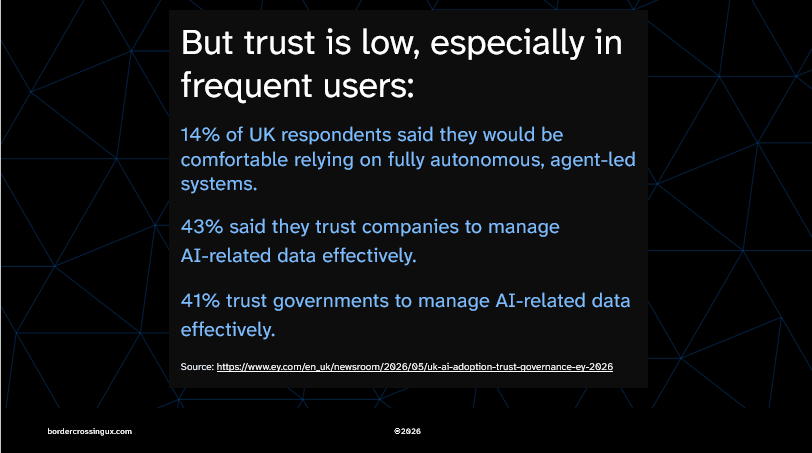
But this is creating a velocity paradox because adoption is rapidly outpacing governance and consumer trust. This is because human behaviour and regulation don’t change as rapidly as the technology does.
So even though we have access to sophisticated tools and more computing power than ever before. What do humans mostly use it for? Well just like the ancient Egyptians, idolising and making images of cats.
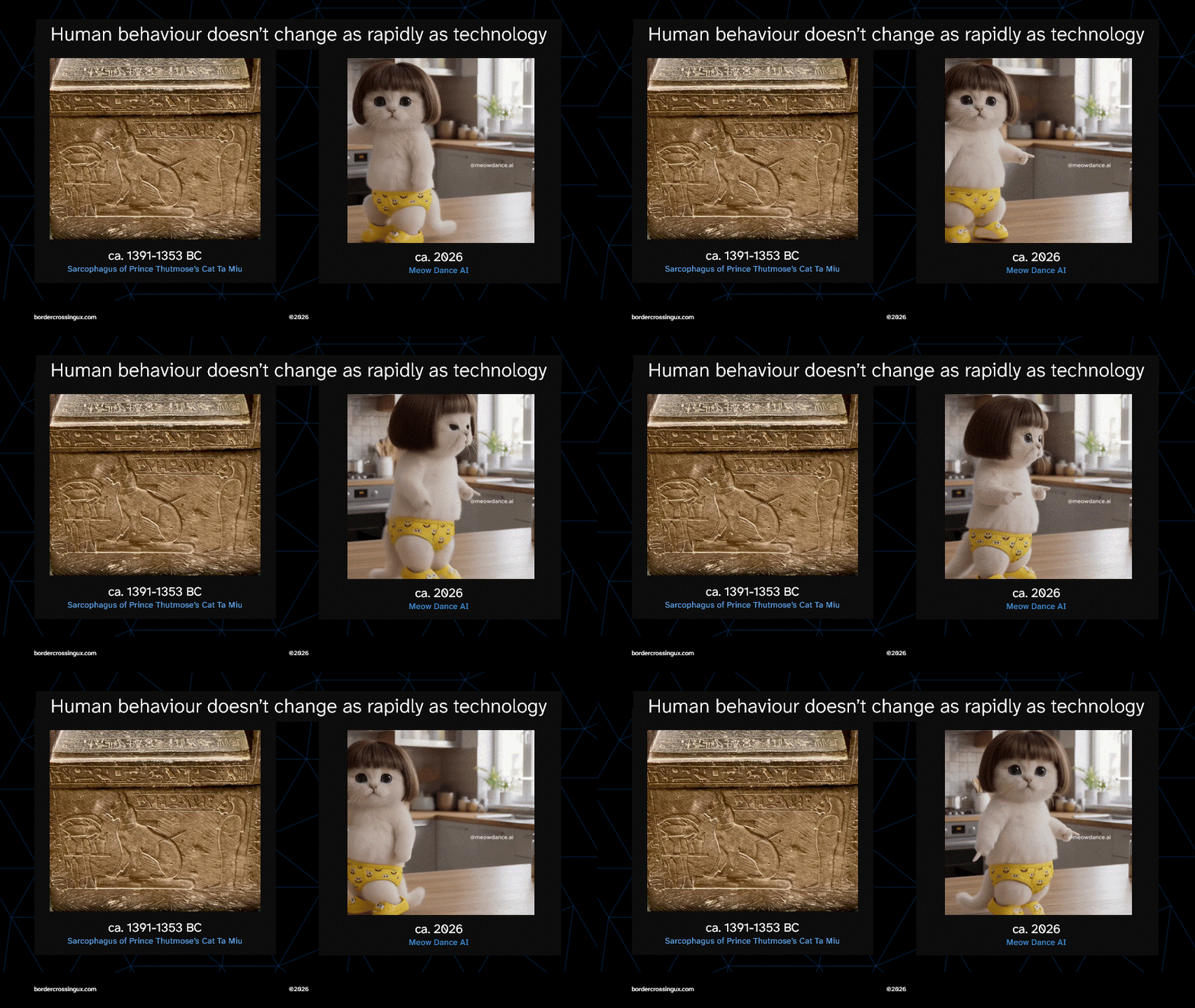
Which is cool in some instances but a waste of the potential of human intelligence working with artificial intelligence.
Responding appropriately to the AI hype cycle
You see, I am not the type of person to lie down and try to stop the bulldozer of progress. I fully recognise that AI and automation has positively changed my approach to work and given me the ability to learn or do things faster than ever before. But perhaps like you, I have spent the last 18 months navigating my way through all the different opportunities that generative AI and automation without adding ethical issues or regulatory risk to our organisation.
And the current AI hype cycle has created a sense of boardroom FOMO. Leaders are struggling to understand how and when to use AI tooling to create true value, for their organisations, their people, and society.
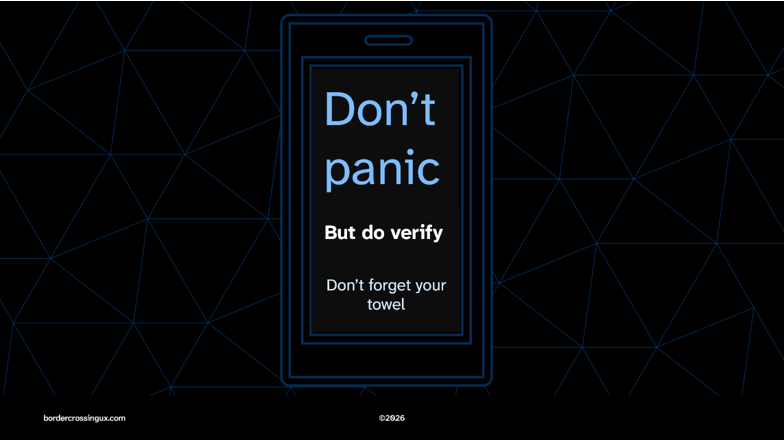
Which is why I created the talk Don’t panic – but do verify – with a new condensed Hitchhikers Guide to the AI Galaxy.
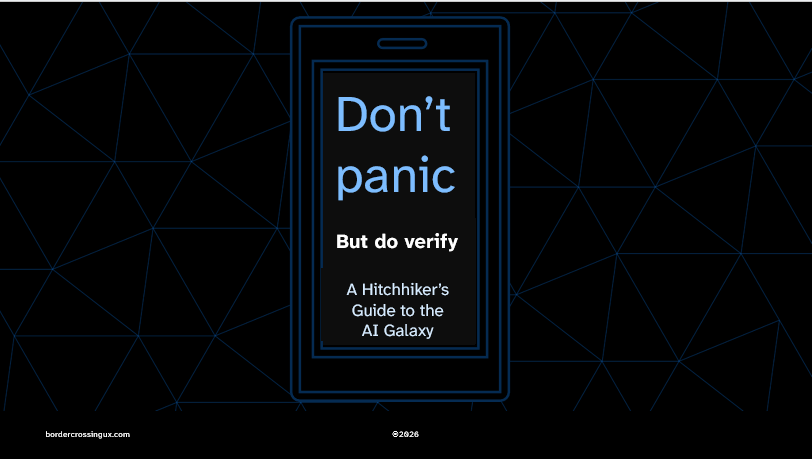
Where we covered 4 chapters to help leaders navigate their way through this new galaxy,
Chapter 1: 42 is the Ultimate answer to Life, the Universe, and Everything
In another Hitchhikers guide to the galaxy (shout out to Douglas Adams, RIP), a supercomputer called Deep Thought, the OG AI, is asked the question: “What is the ultimate answer to the universe and everything?”
After 10-Million years, Deep Thought provided the answer: 42.
When the crowd complained about this answer Deep Thought correctly points out “I think the problem, to be quite honest with you, is that you’ve never actually known what the question was.”
In our new galaxy, if you ask Alexa today what the answer to life, the universe and everything is she will confirm, in less than 10 million years, the answer is 42 because it has been trained to do so, mostly for humour, but also because even in our galaxy it is a plausible answer to a poorly worded question.
Plausible answers, even to poorly worded questions
And that is the key thing to remember: Generative AI is good at giving you plausible answers, faster than ever before. But much like Deep Thought, our AI models are incapable of distinguishing whether a question is a good question or not. Identically, it can’t distinguish whether the response to a question is appropriate, valid and correct, it can only provide plausible responses based on the data it is provided and the parameters it is set.
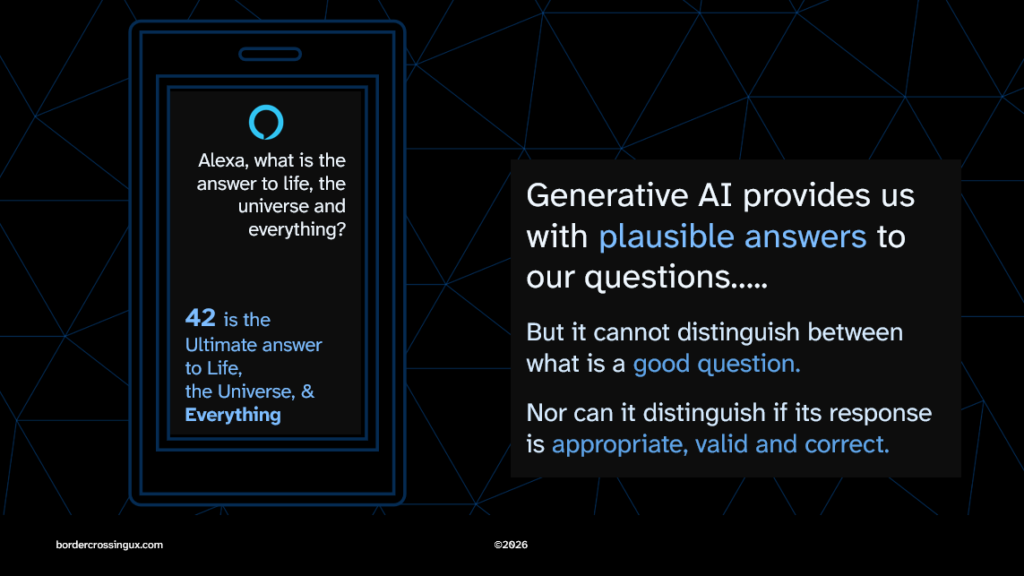
Algorithmic drift
And there’s Algorithmic Drift where the gradual degradation of an AI or machine learning model’s predictive accuracy over time. AI models and algorithms are often trained on out-of-date and sometimes cleansed or synthetic data sets – just a slice of knowledge.
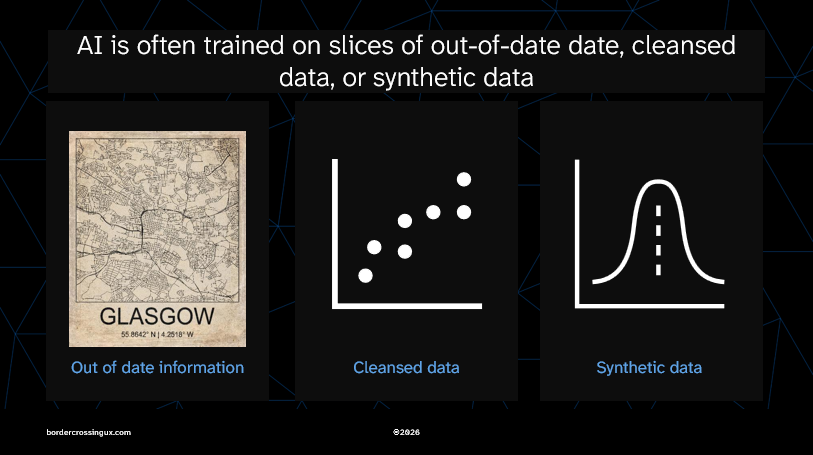
These closed sets allow it to learn in a safe, sandbox, closed off from the messiness of real-world, raw data.
But real-world data is messy, it contains outliers and weirdness, and it shifts over time.
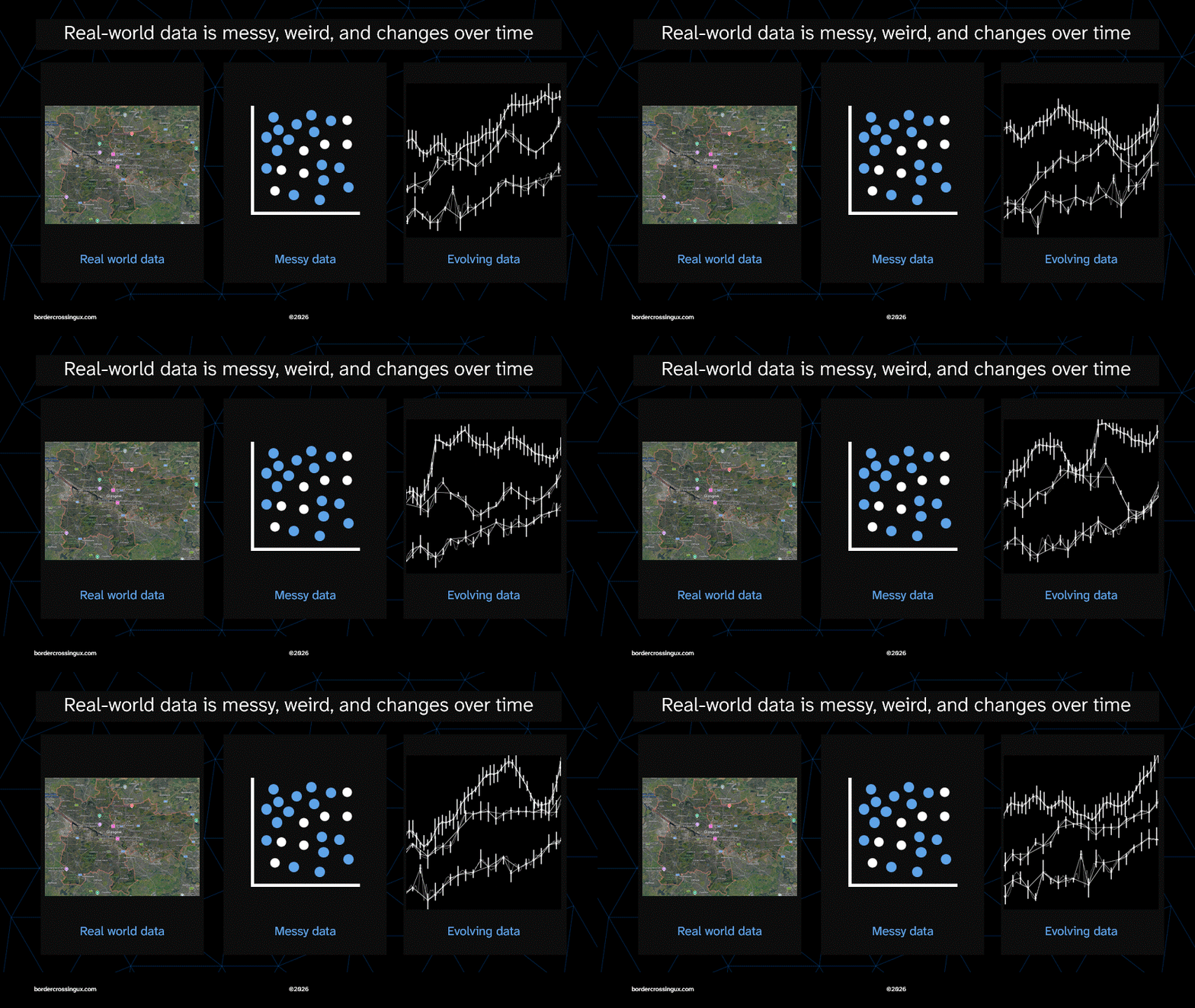
Which means that over time, the model’s original training data are so different from the real-world it makes those parameters obsolete and thus reduces the predictive accuracy of the model. And what concerns me, is that we as humans are making decisions based on plausible and probabilistic answers that may have been created using out of date or potentially incorrect data. Even if the agent is using the live internet as its data source, how much information contained on the internet is out of date or just ‘fake news’.
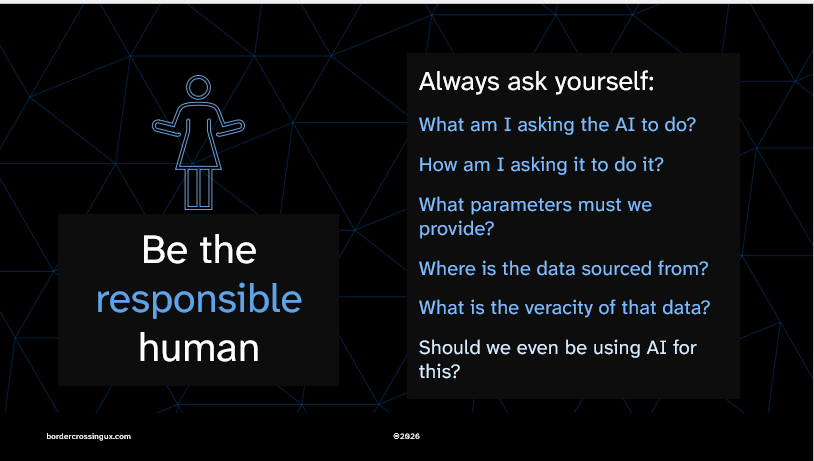
So how can we navigate these issues of only getting plausible answers based on potentially out of date data, not facts? Well, you can be the responsible human. And keep asking yourself these simple questions:
- What am I asking the AI to do?
- How am I asking it to do it?
- What parameters must we provide?
- Where is the data that we are using sourced from?
- What is the veracity of that data?
- Should we even be using AI for this?
Be a responsible human and write better, contextual prompts
And if you do decide to go ahead and use the tool, be a responsible human.Write better prompts to reduce the risk of the unforeseen consequences of our work.
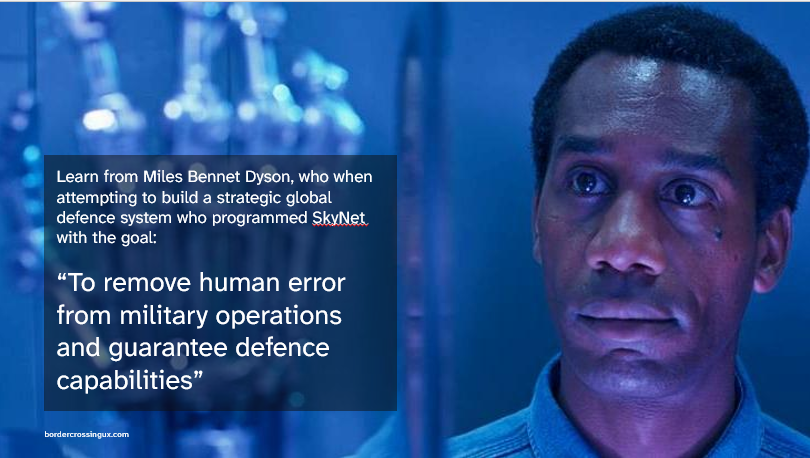
Let’s learn from Miles Bennett Dyson, the engineer who created Skynet, the AI that attempts to destroy humanity. Miles was building a new strategic global defence system to manage national and international security. Sounds pretty good right? But he programmed the goal ‘To remove human error from military operations and guarantee defence capabilities.’
And the easiest way to remove human error, is to remove all humans. And I think we all know what happens next.
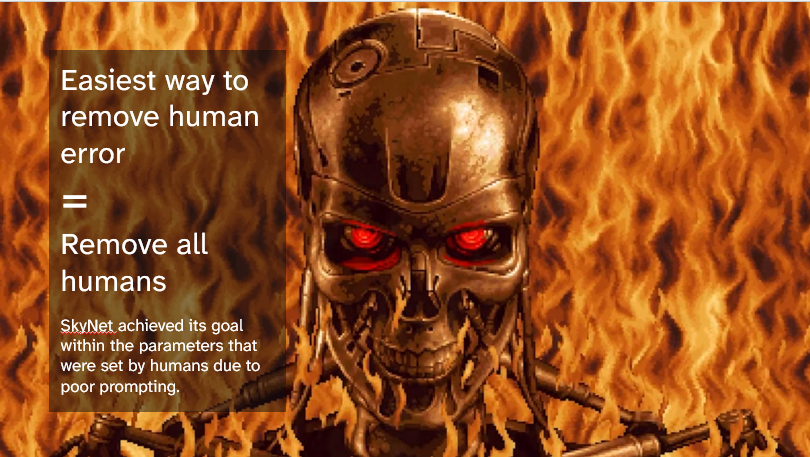
But remember Skynet didn’t wake up and decide to kill all humans, it set out to achieve its goal to remove human error. And it succeed, in a hugely disproportionate manner because Miles didn’t provide the right prompt or parameters to Skynet’s Decision-Making Framework.
In our AI Galaxy what do better prompts mean? Well, they mean providing more context for the questions being asked as well as strict guidelines for the responses. So, Miles prompt could have included ‘without killing all the humans’ or something more eloquent and there would be no Terminators.
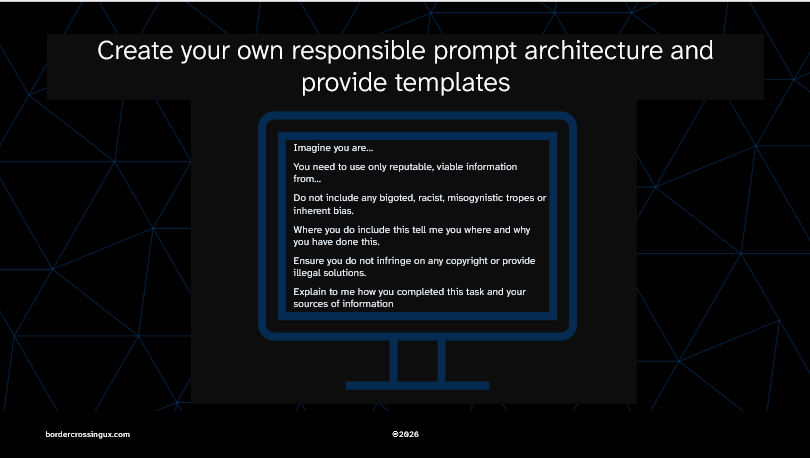
And at an organisational level best way to empower your people whilst avoiding unforeseen consequences and get valuable outputs is to create a responsible prompt architecture. Ensure the human doing the prompting considers all the potential ethical, regulatory, or brand guardrails by creating your own prompt templates.
Verify all responses
But it isn’t just about the prompts, once you have got your output verify all responses.
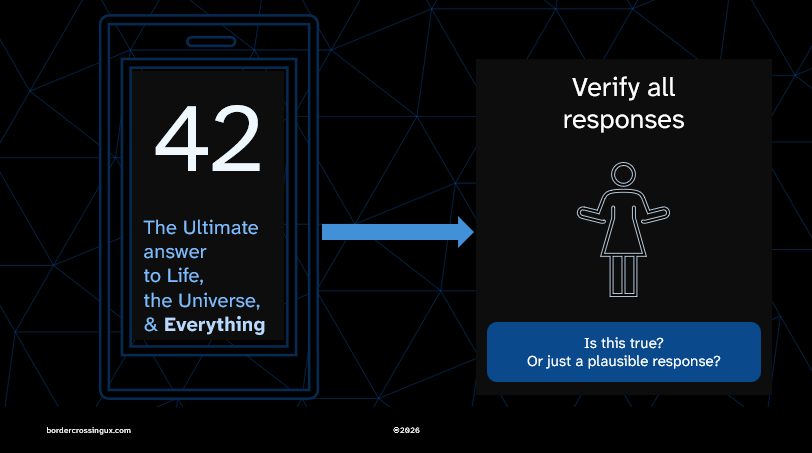
Once you receive the plausible response, apply critical thinking and ensure that you have checked all the facts before deciding to use or act upon it. Think of AI as a brilliant but completely inexperienced intern. They can collate data at lightning speed, but you would never hand their unverified first draft directly to a client.
Chapter 2: How to avoid the total perspective vortex
The total perspective vortex exposes you to the entire infinity of the universe, accompanied by a tiny marker saying, ‘you are here’.
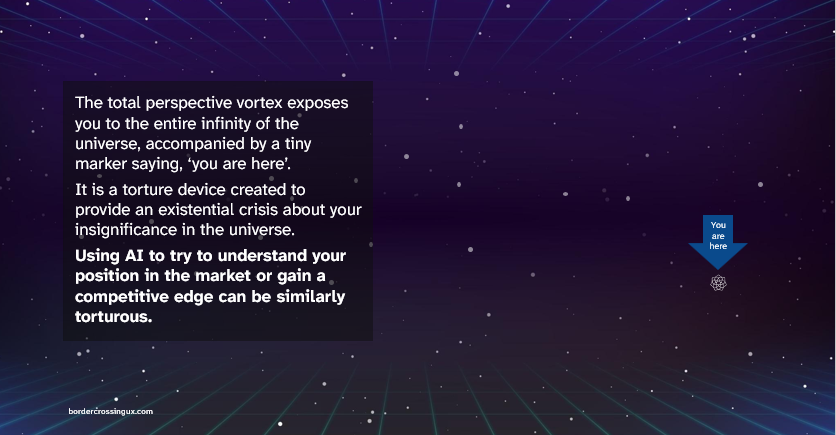
It is a torture device created to provide an existential crisis about your insignificance in the universe. In our AI Galaxy it is easy to run report after report to try to evolve your value proposition by understanding your place against the competition, what your customers want from you, with the goal of knowing how to position your organisation.
The race to beige
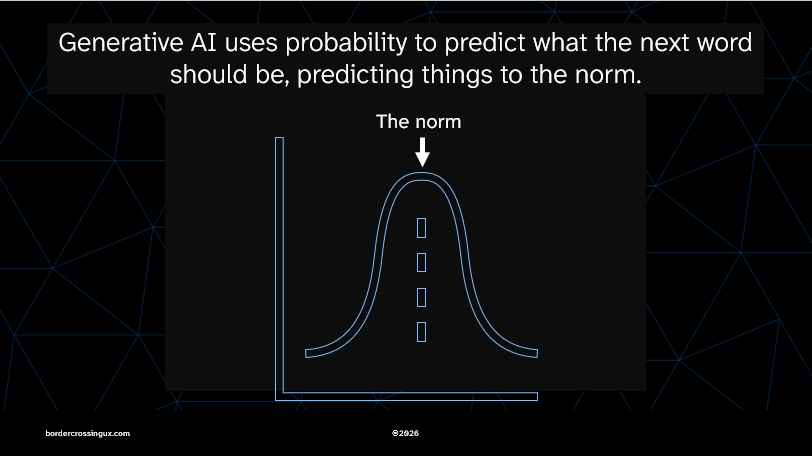
But using AI in this capacity can be a fool’s errand. Unless told otherwise, Generative AI is built to predict things to the norm. So, if you are looking for it to generate a competitive edge to stand out from the crowd then Generative AI is not your silver bullet.
Yes, Generative AI tools, such as Gemini, Chat GPT and Claude are giving us the opportunity to create more things like content, prototypes, and code faster than ever before. They provide us with efficiencies and insights we could only have dreamed of 10 years ago.
However, unless you are using your own data sets and small language models, you are using the same tools, data and insights for the same task as everyone else. And AI is going to create the same outputs that it is doing for everyone else.
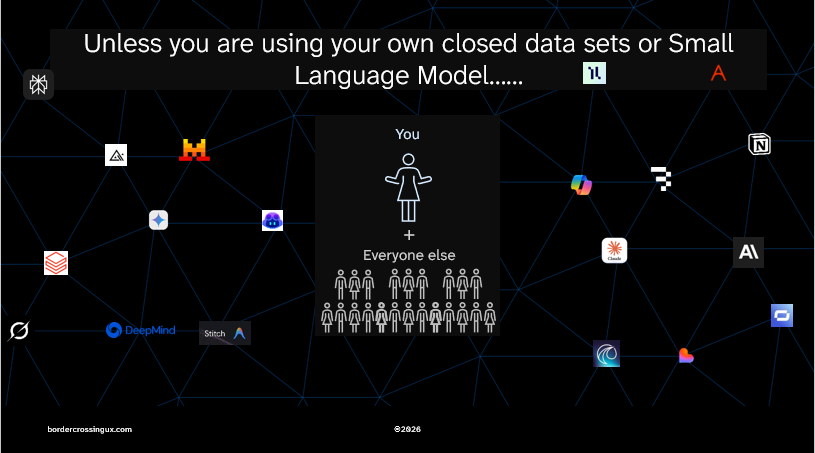
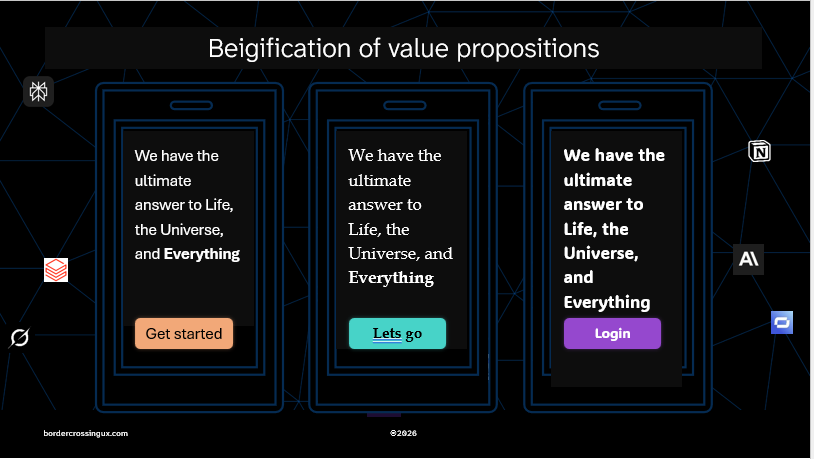
If your organisation is using the exact same public data models, prompting styles, and automation tools as your competitors, you aren’t racing to the bottom, you’re racing to the norm. A key threat of unverified AI is the beigification of your brand and value propositions.
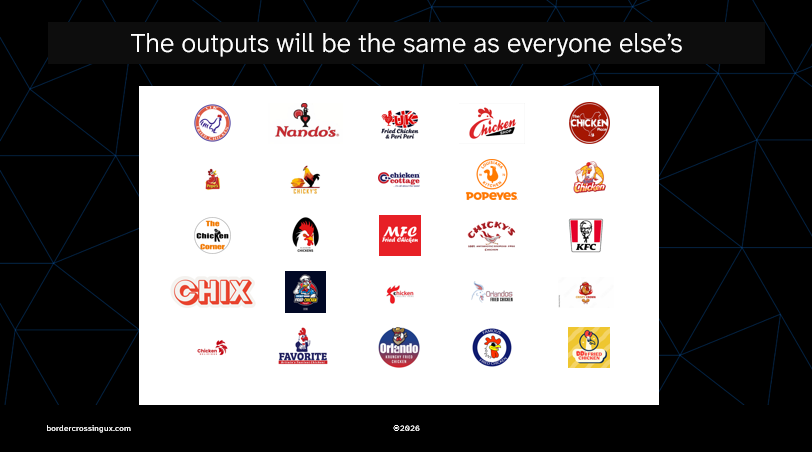
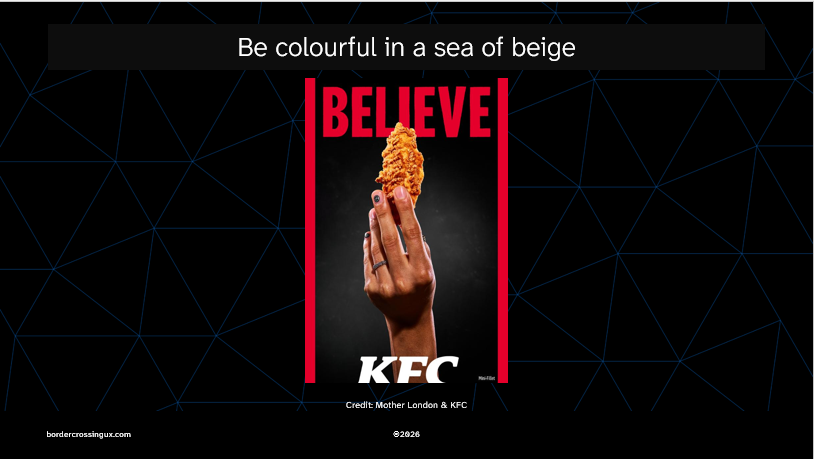
To avoid this – we must behave as a galactic president and adventurer and rather than get sucked into a total perspective vortex – embrace your ego and the individuality of your brand, your offering and your customers. Be colourful in a sea of beige and make your tiny marker stand out whilst not losing your brand’s soul.
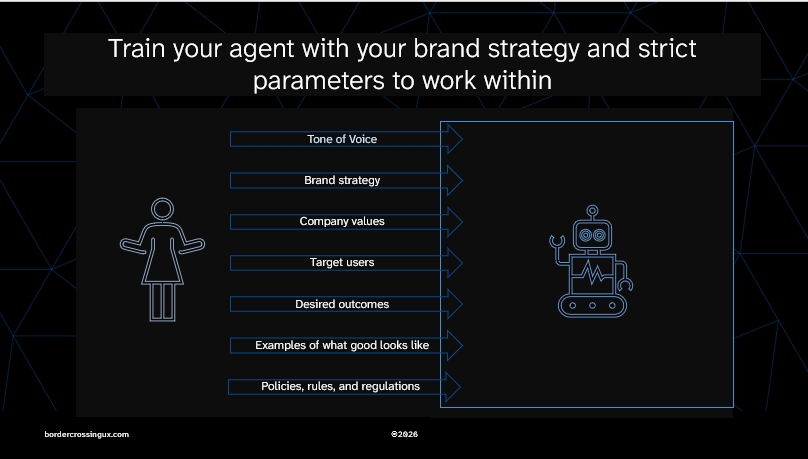
And how can you do that if you do choose to use Generative AI? Ensure that you have trained it with your organisation’s brand. Not just your tone of voice, but your brand strategy and especially your company values – even create your own small language model for it to work from.
Then give it parameters such as who you are targeting with the content, what outcomes you are looking to achieve with it, tell it to avoid being obviously written with AI, and examples of what good content looks like to you. And finally, provide the essential guardrails of your policies, rules, and applicable regulations.
And then remember that when you receive your output verify it! Think of it as a first draft with plausible information that needs to be verified.
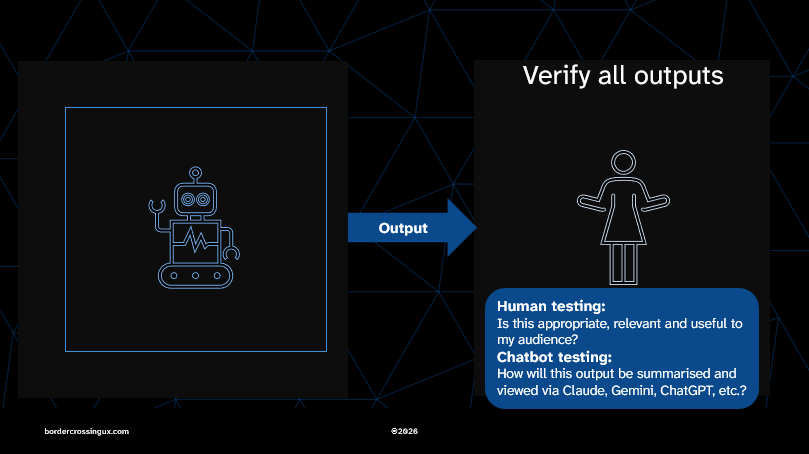
Be the responsible human that is testing if it is appropriate, relevant and useful for your audience. And test it again with AI tools and see what your audience will see through Claude, Gemini, or Chat GPT’s lens. Ensure that your content is structured so that both humans and AI can consume it and understand its relevance to them.
But it’s not just about avoiding the beigification of your brand and content, but also the beigification of value propositions. More companies appear to be offering similar products and services all promising the same outcomes.
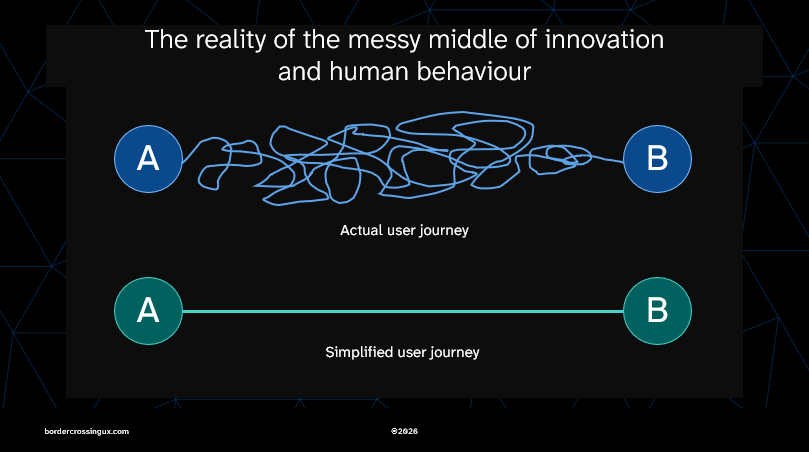
To retain a strong and differentiated value proposition we must stop trying to oversimplify the complexity of humans and the messiness of innovation. For centuries, we have been modelling behaviour and trying to reduce it to simple, linear pathways. And as previously mentioned, we’ve programmed AI to do the same even though it has the capacity to deal with larger and more complex data sets.
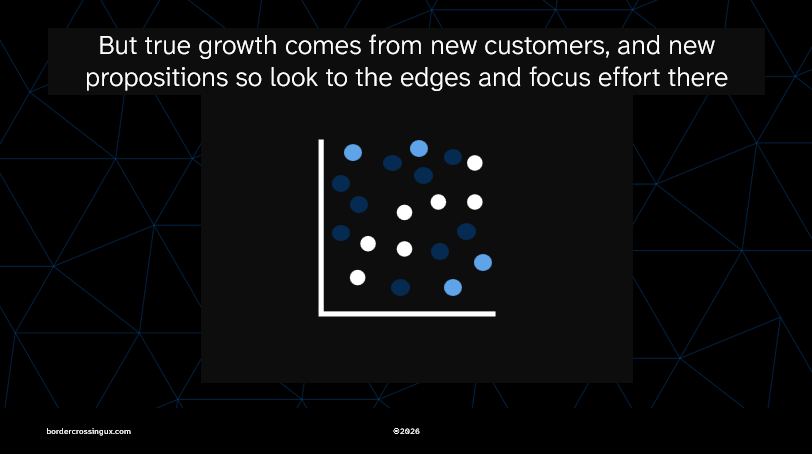
This is dangerous, especially if you are looking for growth in your organisations – too often we focus on our current customers and their behaviours to try and attract similar people. But if we want to attract new customers, with new value propositions, we must look at the people on the edges, people away from the mode. And once you understand what your edge customers want, you can start to focus your innovation efforts on the problems and improvements that will attract and retain new ones.
Chapter 3: So long, and thanks for all the fish
Beyond the cost of tokens or the time wasted on nonsense queries and meme creation, the cost of using and misusing AI could be higher than you think. That is why it is important to create an AI strategy that is resilient, responsible, and beneficial to both people and the planet.
We’ve discussed the potential cost of your customers due to brand and proposition of beigification but they are not the only people to consider. Leaders must also create an AI strategy that empowers and enables their teams.
The cost of AI – your people
The incorrect usage of AI tooling or communications around it can result in the disenfranchisement of your team and the potential of loss of your best people. Every day we hear the evolving stories about AI taking our jobs, but the reality is that AI isn’t taking anyone’s job. It doesn’t currently have that level of Agency. But your people may choose to leave because of it.
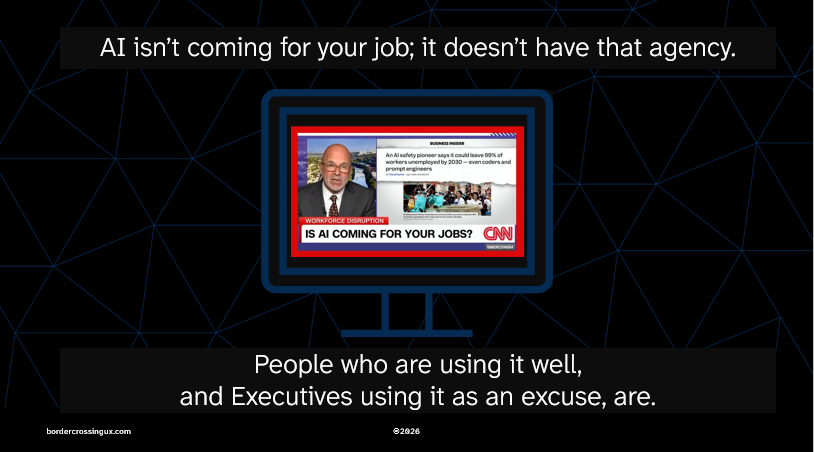
So, as leaders we need to ensure that our staff and teams understand how our organisations are going to use AI and how imperative it is that they now take on the role of being responsible humans who use their critical thinking.
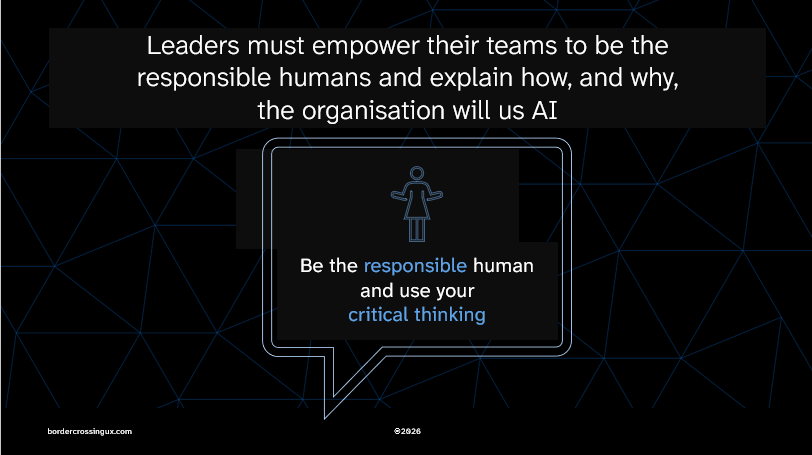
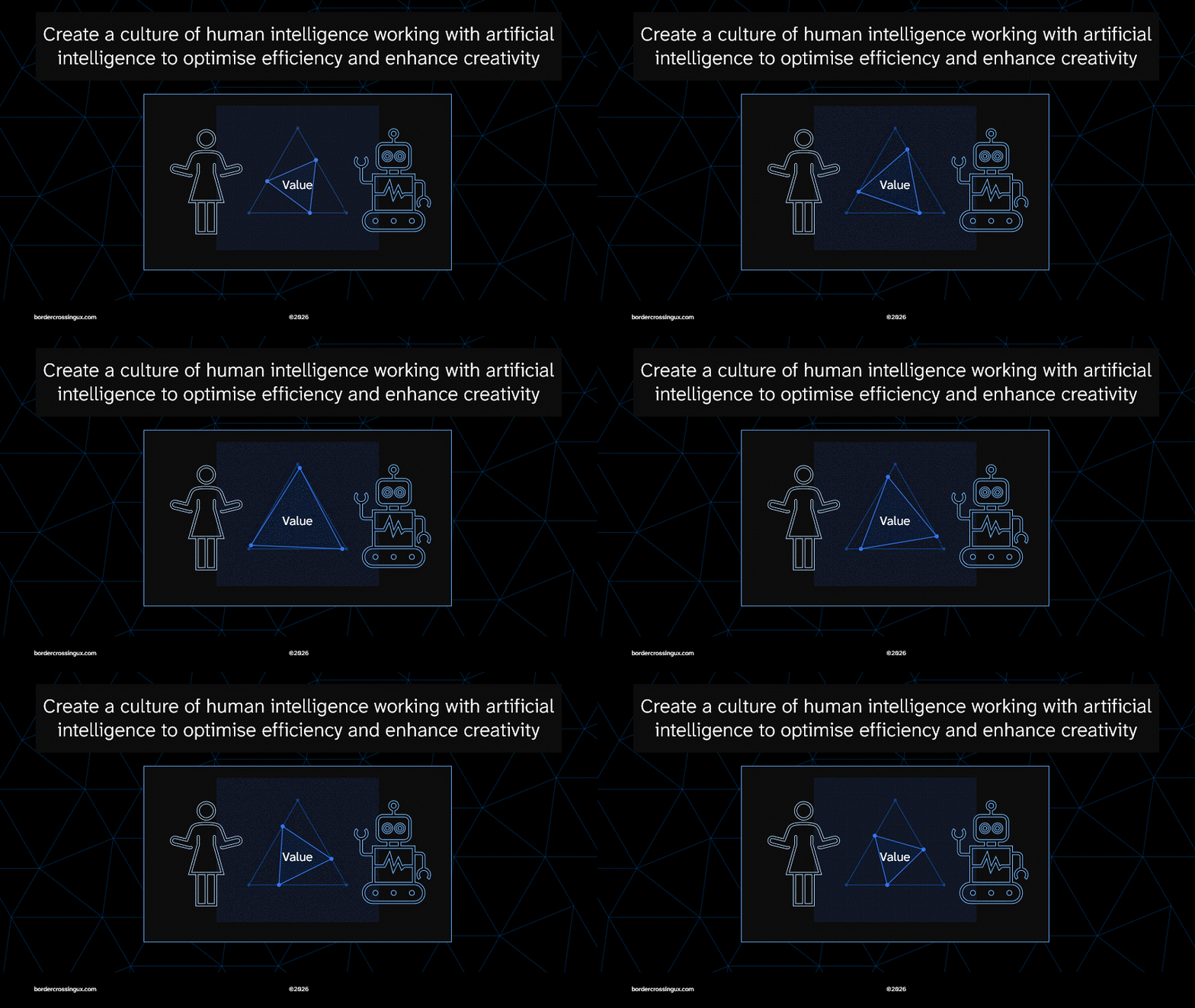
Your teams need to understand the purpose of an AI tool that is introduced and how to use it responsibly. Ensure you create a culture of responsible experimentation using human intelligence working together with Artificial Intelligence to create real value for the organisation.
A culture where people embrace tools to optimise their workflow and enhance their creativity.
The cost of AI – the planet
And finally, the impact of AI on our environment. We are in a climate crisis where we already are using an unsustainable amount of power. The global usage of AI has increased this energy consumption rapidly.
I’ve heard many analogies of the carbon or planet cost of an AI query. Perhaps, the easiest to conceptualise is that every prompt has up to the same environmental cost as throwing a jug of drinkable water onto concrete.
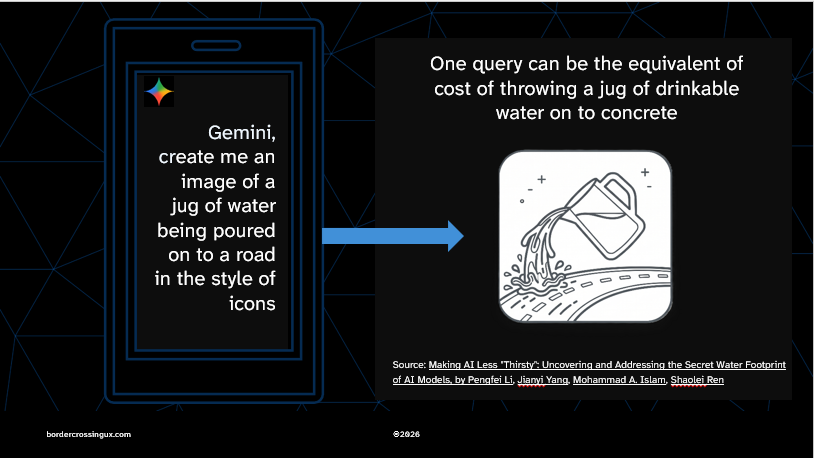
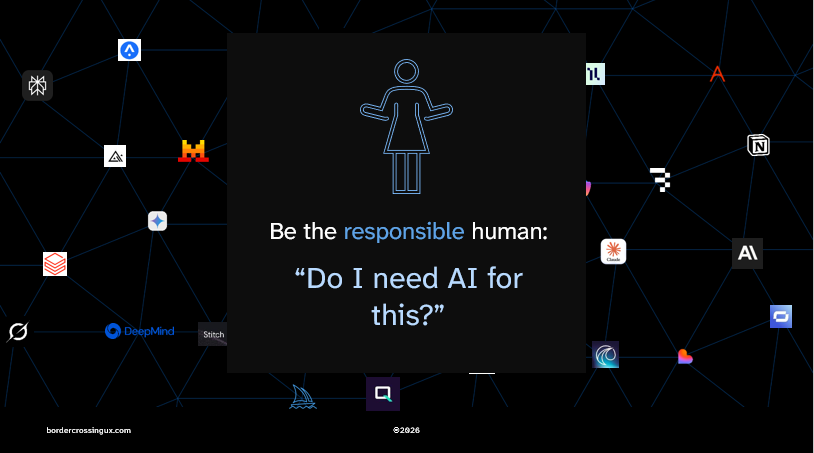
So, each time you use your AI tool you are costing the planet. Therefore, I think it is imperative that we, as responsible humans, think about that cost before we use AI. Do we always need to go to ChatGPT for receipe ideas or baby names? Could a simple Google search or picking up a book do the same thing, if not better?
Chapter 4: Don’t forget your towel
In our AI galaxy your towel is an evidence-based framework and roadmap for creating value. It has both practical value, psychological value and if you have one, people will assume you have all your other gear in order too. It allows you and your teams to prioritise AI investments based on actual value, potential impact and potential risk or harm.
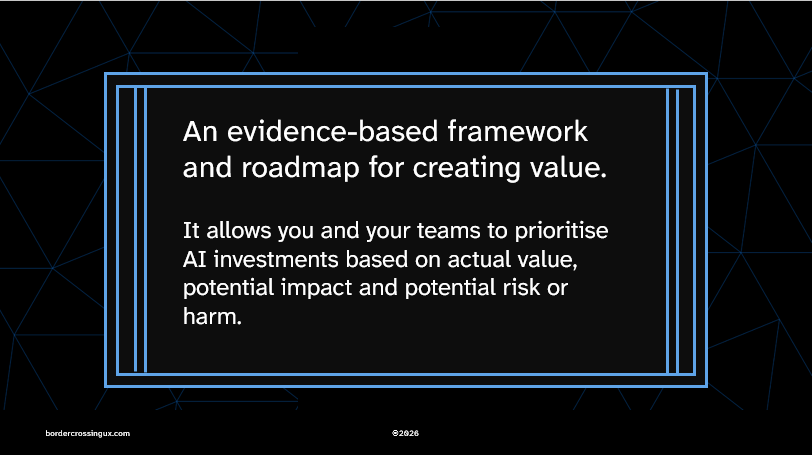
So, what should you weave into your towel?
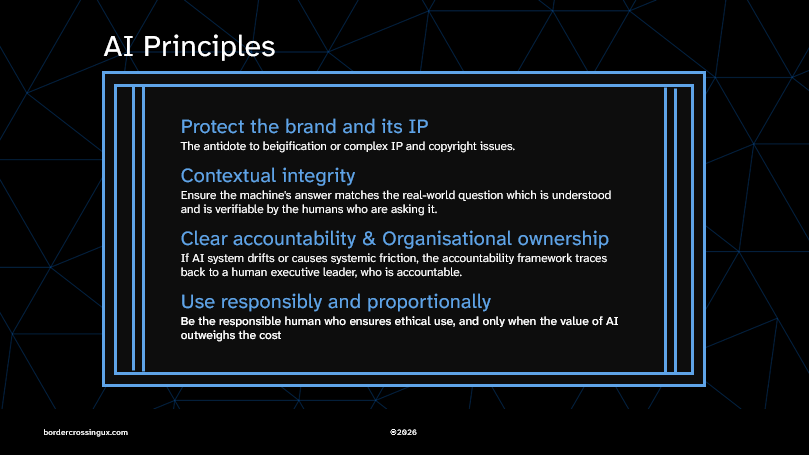
AI Principles
Firstly, start with AI principles, a foundational set of values, ethical guardrails and operational rules to establish how your organisation will create and use artificial intelligence.
Production and Operational Quality Gates
Then Weave your principles into a framework when using AI with clear quality gates within your production and operational workflows. For example,
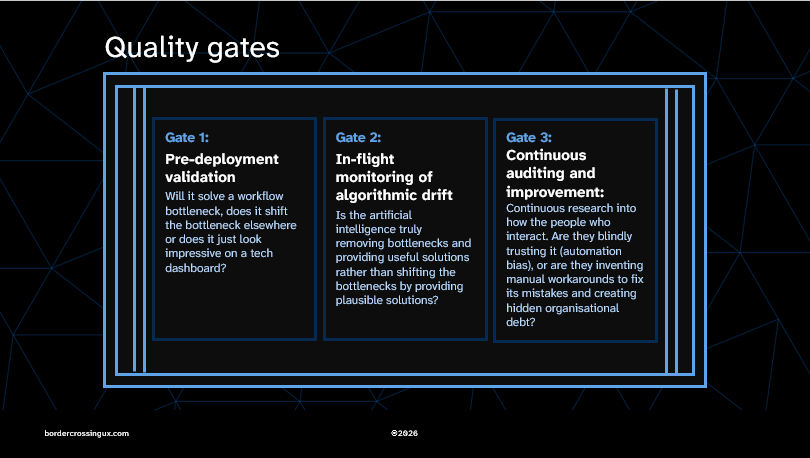
Gate 1: Pre-deployment Validation: Does this fix a human bottleneck or just look impressive on a tech dashboard?
Gate 2: In-flight Drift Monitoring: Is the AI genuinely removing systemic friction, or shifting it elsewhere?
Gate 3: Continuous Auditing: Are your teams blindly trusting outputs, or building invisible manual workarounds? Are you using both quantitative and qualitative data to understand their functional and emotional reactions to using AI?
By creating gates, you can not only ensure you have a responsible human in the loop but also understand where you are delivering value or where you just think you are.
And then finally ….
Measure what matters to understand value creation
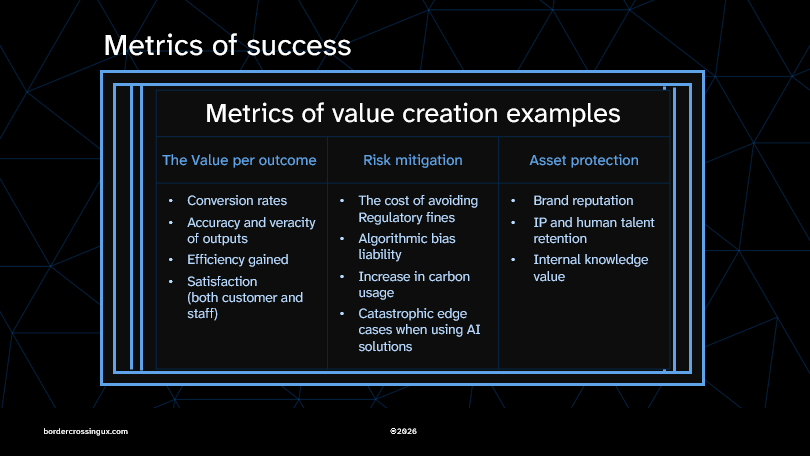
This is perhaps the most critical part of your pragmatic framework. Previously, you may have been measuring cost per task, and other legacy tech metrics. But in the AI galaxy we need to look at strategic value metrics that measure real ROI, for example: The Value per outcome, Risk mitigation, and Asset protection
Final thoughts on what it means to lead and navigate this new AI galaxy
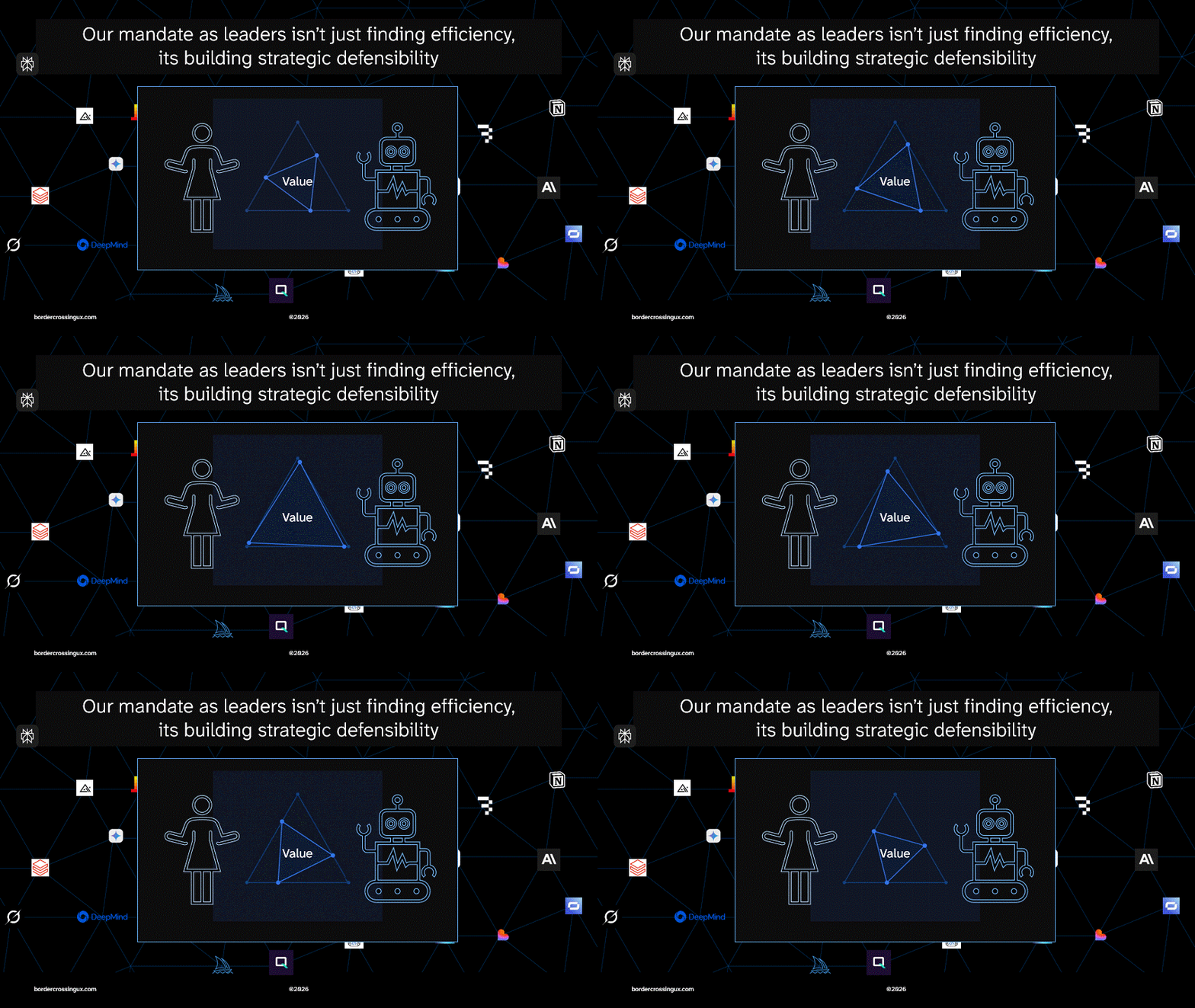
We are standing at a crossroads where the temptation to automate everything is immense. But as business leaders, our mandate isn’t just to find efficiencies; it is to build strategic value, defensibility, and resilience. If you chase the ultimate answer of ’42’ without understanding the messy human context of your customers, you will inadvertently race your brand straight to the norm. You will become beige.
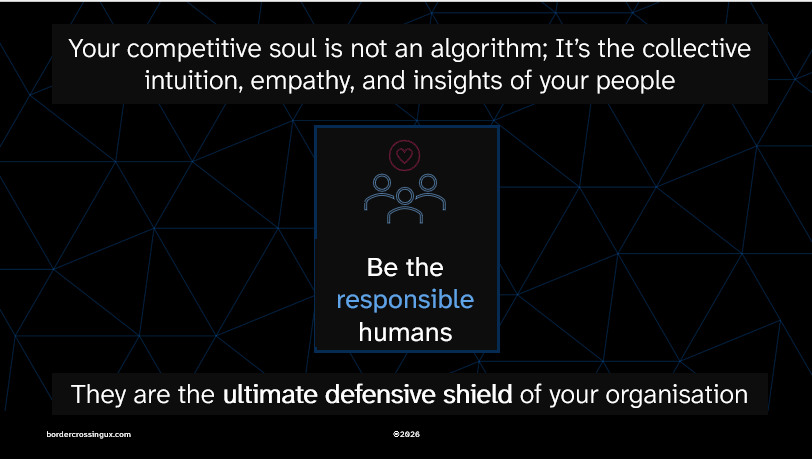
Your competitive ‘soul’ is not an algorithm. It is the collective intuition, the empathy, and the unique insights of your people. Being responsible humans isn’t a bottleneck to automate out or a bureaucratic speedbump.
It is the ultimate defensive shield of your organisation.
Don’t let the shiny promises of total automation panic you into automating away what makes your company great. Equip your teams with the right guardrails, look to the edges of human behaviour for your next wave of innovation, and whatever you do in this bizarre new AI galaxy, always verify and don’t forget your towel.
Want to learn more?
A big thank you to Digit.FYI for inviting me to this great AI Business Summit to share these thoughts.
You can look at the full slide deck here. Or if you fancy a human-to-human chat about how you can be the responsible human getting value out of AI the get in touch.
Sources of information and inspiration for this talk
Like most talks this has been inspired and influenced by many people. Here are a few of my sources and inspirations:
- Making AI Less “Thirsty”: Uncovering and Addressing the Secret Water Footprint of AI Models
- Market Research Society’s event with the International Journal of Market Research (IJMR): The Alchemy of Insight: Technology, Hype, and the Search for Truth.
- Full Moon: AI & Work – How Young People Are Thinking About the Future
- EY: UK embraces AI at scale with trust and governance rising up the agenda
- Dan Klein, Global Chief of Data & AI, Zühlke’s talk: The Big Short in the age of GenAI at the Fintech 2024 Summit
- The State of AI in the Enterprise – Deloitte’s 2026 AI report tracking adoption and impact